U.S. Funding Cuts and the Impact on Palestinian Women and Children

April 30, 2019

International donors play a prominent role in delivering core social services in Palestine, according to the World Bank. So when the United States announced it was ceasing all funding to Palestinian aid and civil society projects, the implications were catastrophic for people living in East Jerusalem, the West Bank, and Gaza. 


For decades, the U.S. government-funded Palestinian programs ranging from education, water and sanitation, to Palestinian Authority security forces. The cuts came in stages over the course of the last year and culminated in February 2019 when every penny of U.S. funding for Palestinians came to a halt. 


Below are some of the milestones of the funding cancellation:


  • On August 25, 2018, the Trump administration first announced that there would be a $200 million cut in aid funding for programs in Palestine, despite the projected budget of $251 million for the 2018 fiscal year. USAID is the principal U.S. government agency that administers the United States’ foreign assistance program in the West Bank and Gaza. Its services reached nearly all parts of Palestinian daily life. According to its website, USAID has “provided more than $5.5 billion since 1994 for programs in the areas of economic growth; water and infrastructure; education and health; governance and civic engagement; and humanitarian assistance. USAID assistance supports a viable economy and improves the everyday lives of Palestinians.”
  • Six days later on August 31st, the U.S. State Department also announced that the U.S. would terminate all funding to the United Nations Relief and Works Agency for Palestine Refugees in the Near East (UNRWA). The U.S. has been the largest donator to UNRWA since its creation in 1949, and the aid impacted over five million Palestinians with refugee status. In 2017, the U.S. gave UNRWA more than $360 million in funding. The agency’s 711 schools provide free basic education for Palestinian refugee children in the West Bank – including East Jerusalem – Gaza, Jordan, Lebanon and Syria. The ending of U.S. funding to UNRWA schools impacted 525,000 kids, 50 percent of which are girls.
  • A few months later in February 2019, the US stopped all remaining aid to Palestinians in the West Bank and Gaza, in a step linked to new anti-terrorism legislation, the Anti-Terrorism Clarification Act. This act allows for U.S. citizens to sue international groups that are receiving U.S. aid for links to any terrorist-related crimes in the past. It is explained, “This means that if the PA will receive even one dollar of U.S. funding, it could face lawsuits asking for hundreds of millions of dollars in compensation.” Soon after, the Palestinian Authority (PA) requested that the US state department end all U.S. funding because of a fear of lawsuits. As a result of ATCA, more than $60m in annual funds for the Palestinian security services ended.


Deep Cuts for Palestinian Schools


While the U.S. funding cuts have created a wide-ranging impact, education took a big hit, especially schools that receive UNRWA and USAID funding. Soon after the cuts were announced in August 2018, there was a tense period where the UNRWA was uncertain of the ability to secure the funding necessary to pay the 22,000 teachers in their schools and open their 711 doors for the 2018 school year. 

After the cuts were announced, the Commissioner-General for the United Nations Relief and Works Agency for Palestine Refugees in the Near East (UNRWA) Pierre Krahenbuhl declared the need for an addition of $217 million to ensure the opening of the schools for the 2018 school year. Fundraising efforts were initiated, such as the Dignity is Priceless campaign, and the UNRWA began making appeals to the Member States to increase their funding pledges. 


When the time came for the schools to open in September 2018, there were enough funds to start the school year, but there was still uncertainty in how long the funds would last. Certain positions at UNRWA schools deemed non-essential were cut because of the lack of funding, and funding for the 2019/2020 school year remains uncertain. 


Undermining Women and Girls’ Economic Inclusion


Many fear that cuts to education will have a uniquely negative impact on Palestinian women and girls. When society or institutions start to break down because of lack of investment, women are even further burdened by the domestic responsibilities they are traditionally associated with, said Susan Markham, USAID’s former senior coordinator for gender equality and women’s empowerment. Managing time between professional responsibilities and “housework” becomes an even greater challenge. “It’s something that is not measured oftentimes, but has a real impact on everyday women’s lives,” she adds.


“USAID really focused on helping [Palestinian] women gain economic empowerment,” says Markham. It involved programs that put girls through high school, funded internships, and mentorships, and helped women start their own companies, creating a positive cycle where women “were being valued by the community as a business owner or a worker able to bring money home to the family.” These changes, she says, helped shift gender attitudes in Palestinian society. Without USAID and UNRWA programs that were promoting gender equality through education, fewer opportunities exist for women to participate as active members of society.


Continued Uncertainty as NGOs Try to Fill the Gap


Palestinian school funding is still uncertain in 2019. The UNRWA made difficult decisions in adapting to the new budget, including the elimination of many school positions. Though its schools still function, the UNRWA’s capacity to carry out its usual programming has been reduced.


The impact of school instability on student stress levels in palatable. Hada, a fourteen-year-old student at a UNRWA school in Gaza, told the United Nations News Service that “everyone was very anxious,” and when students tried to visit the school counselor’s office, she added, “they were reminded that she was no longer there.” 


Another student, Eva, 14 told UN News: “The school is trying as much as it can to teach us in a hands-on method, and in past years when we studied chemistry we used to do experiments. I have dreams to be something big in the future, but I have to cut those dreams down because of the situation we live in now.”


Sponsor A Palestinian Child’s Education Today!


The likelihood of ongoing funding instability for Palestinian social services makes the work of NGOs on the ground in Palestine even more urgent. House of Hope is more determined than ever to deliver an education for Palestinian children that helps them not only survive but thrive. 


Whether or not these children have access to a quality education depends on donors like you. When you make a donation to House of Hope or sponsor a child’s scholarship, you plant the seeds of hope and healing in the Holy Land. 


Learn more about House of Hope student scholarships here. Your scholarship nurtures the next generation of Palestinian peace and changemakers. 


Donate today!


-written by Megan Collette, Supporting Hope Spring 2019 intern
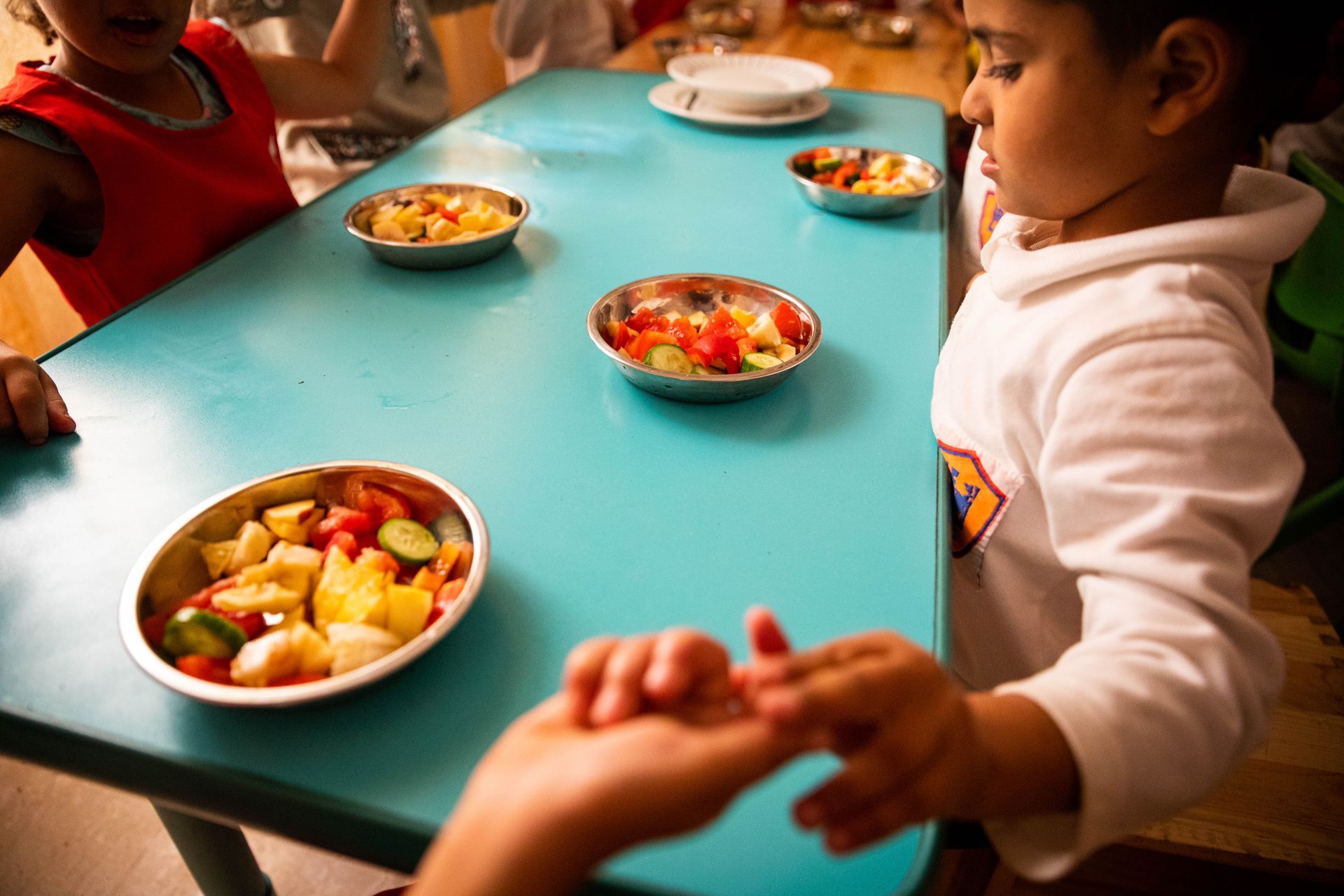
Children eating colorful fruit bowls around a turquoise table
By Milad Vosugeritchian April 3, 2026
Dear Beloved Brothers and Sisters, Grace and peace to you. I write to you today from the West Bank — during a war, with missiles crossing the skies. And yet it is also a sacred season of prayer. Our Muslim neighbors are observing Ramadan. Soon the Jewish community will celebrate Passover. And Christians around the world are preparing for Easter — celebrating the resurrection and the promise that life is stronger than death. Each of these holy days calls us to wake up spiritually. To do so, I often turn to prayer — to the words of Christ, to the Gospel passages that have stayed close to my heart in this same land where Jesus walked. They call us to remain awake in prayer, to have courage in the face of suffering, and to trust that God’s hope is stronger than fear. “I have told you these things, so that in me you may have peace. In this world you will have trouble. But take heart! I have overcome the world.” — John 16:33 “Why are you sleeping?” he asked them. “Get up and pray so that you will not fall into temptation.” — Luke 22:46 Living here in the West Bank, surrounded by uncertainty and fear, these words speak directly into our present moment. When Jesus says, “Take heart! I have overcome the world,” he is not promising us an easy life. He told us clearly that we would face trouble. Yet in the very same breath, he calls us to courage. For me, faith and courage cannot be separated. Faith calls us to courage. Faith is courage. Faith allows us to stand when fear surrounds us. Faith allows us to take the next step when the road ahead is uncertain. Faith allows us to keep believing — that love, justice, and our common humanity will prevail. Faith does not remove the mountain before us. Faith gives us the strength to climb it — and the courage to take the next step. Here, faith is not an idea. It is how we live. In recent nights, we have watched missiles crossing the sky as war unfolds between Israel and Iran. In Israel, there are bomb shelters in nearly every building. Here in the West Bank, most Palestinian communities have none. Children still ask questions. Parents still try to calm their fears. Schools have closed. Many children are trying to continue learning online whenever they can. Families are doing their best to live ordinary lives in the midst of extraordinary uncertainty. When I see Palestinian families navigating this fear each day, I remember: the Gospel does not allow us to look away from suffering. And so the words of Jesus return to my heart with urgency. “Why are you sleeping?” I hear this not only as a question for those of us living here — but as a question for the whole world.  “Why are you sleeping?” Christ calls us to wake up — not only in prayer, but in conscience. To see suffering clearly. To refuse indifference. To stand for justice with courage and with compassion. For me, following Christ here means living what I call a resistance of the heart — a resistance that refuses hatred, a resistance that protects our humanity, a resistance that continues to believe that love is stronger than fear. This resistance is sometimes tested in very personal ways. Just one month ago, I was driving home from the gym with my son when an Israeli military jeep intentionally struck my car. In that moment I felt fear and shock. Yet even then I heard a quiet voice in my heart — reminding me that violence and fear do not have the final word. Even in the hardest moments, the Gospel still calls us to live differently. In times like these, prayer becomes our strength. Prayer reminds us that God is stronger than fear — stronger than weapons, and stronger than the darkness of war. At the House of Hope School, we try to live this message every day with our children. In the midst of fear and uncertainty, we teach them courage, compassion, and the belief that even in the hardest circumstances — peace and humanity are still possible. So we remain awake in prayer. We choose courage in the face of suffering. And we continue walking forward in hope — trusting that God’s love is stronger than fear. We hold onto the words of Christ: “Take heart.” Because Christ has overcome the world, we believe that violence will not have the final word. Fear will not have the final word. Hatred will not have the final word. Love will overcome. Justice will overcome. And one day, by God’s grace — peace will overcome the world. Milad Vosugeritchian, Co-founder and Director of Peace and Justice Education, House of Hope Vision School
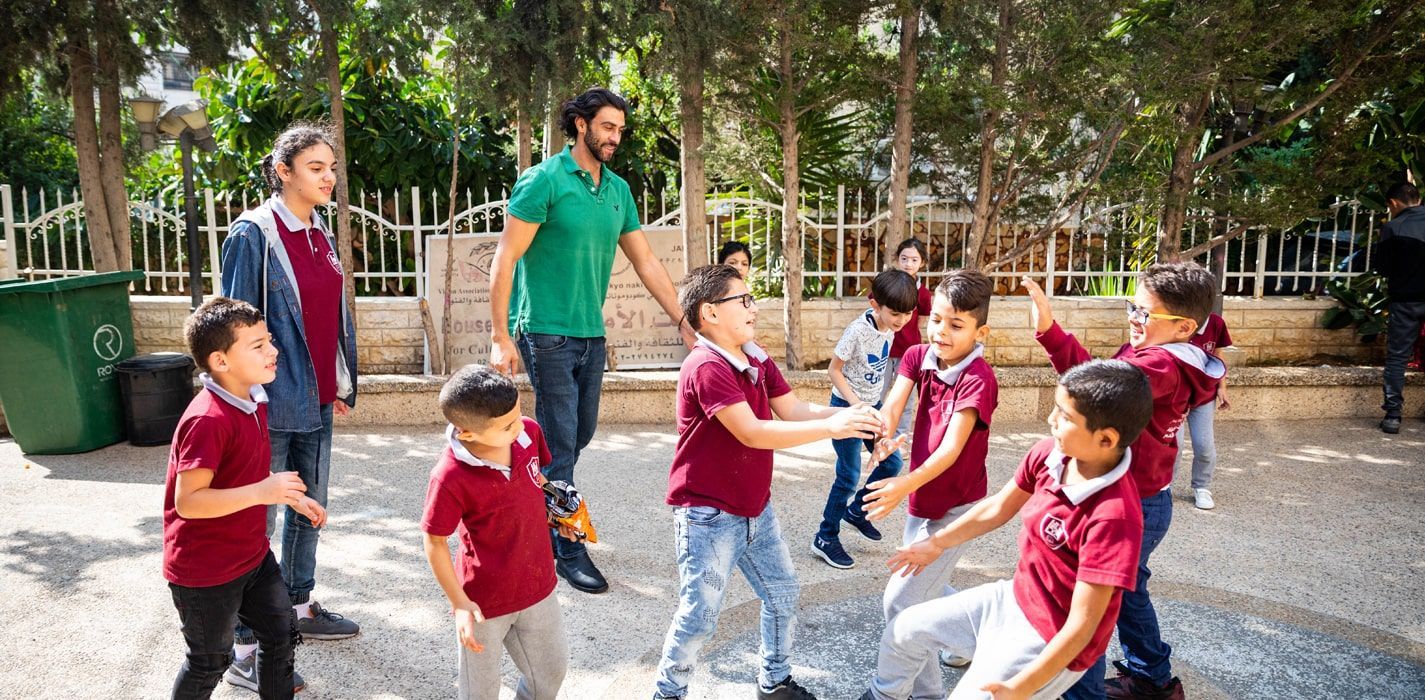
An adult in a green shirt supervises children playing a game in a tree-lined outdoor schoolyard.
By thea March 14, 2026
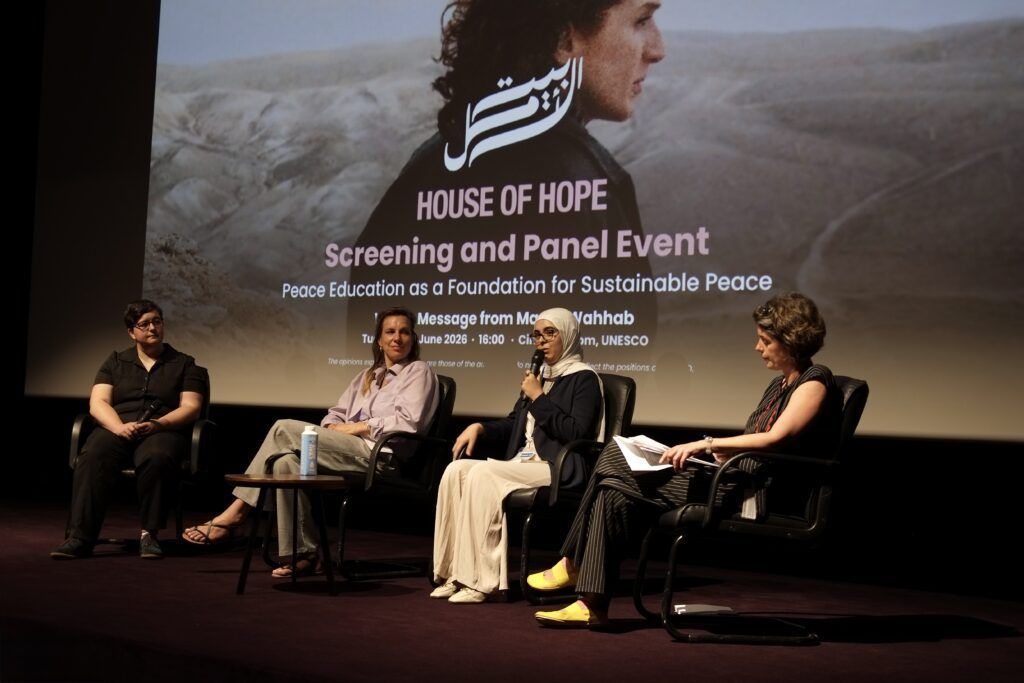
Times of war create immense stress and uncertainty for all of us, but children are especially susceptible. Even if they are not in physical direct danger, children can experience negative psychological effects from living through war. A review published in 2022 found that rates of PTSD, depression, and anxiety were 2-3 times higher among those exposed to armed conflict compared those who weren’t, with women and children being the most vulnerable. There are, however, things we can do as caregivers to help counter the effects of war on the children that we care for. Manar Wahab, House of Hope’s Director of Trauma-Informed Education has recently taken the time to assemble guidance for caregivers, based on her experience and training in the Waldorf educational framework. The Waldorf approach focuses on “Emergency Pedagogy” to help stabilize children’s emotional well-being by emphasizing familiar structures and routines, as well as artistic expression. You can read Manar’s full guidance in the documents linked below, which are available in both English and Palestinian Arabic. These documents contain practical suggestions for anyone caring for young children during the chaos and stress of war, and include activity suggestions as well as stories that can help children hold on to a sense of hope during wartime. 
Close-up of a person resting their face on their hand, gazing out a window in soft light.
By Milad Vosgueritchian February 1, 2026
To All Who Believe That Humanity Comes First
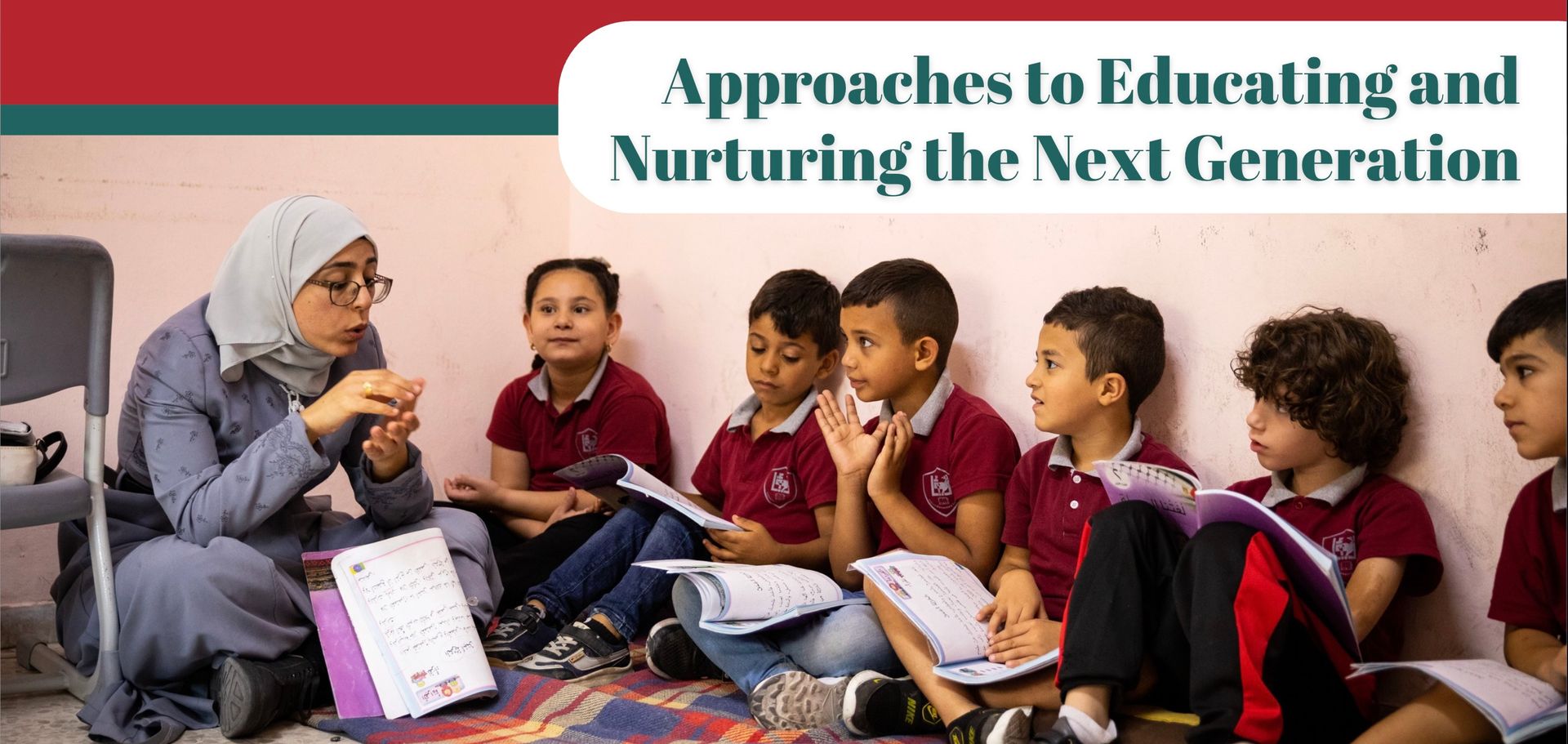
A teacher in a hijab leads a lesson with several children sitting on the floor.
By thea January 20, 2026
Palestinian Nonviolence and Peacebuilding: Approaches to Educating and Nurturing the Next Generation
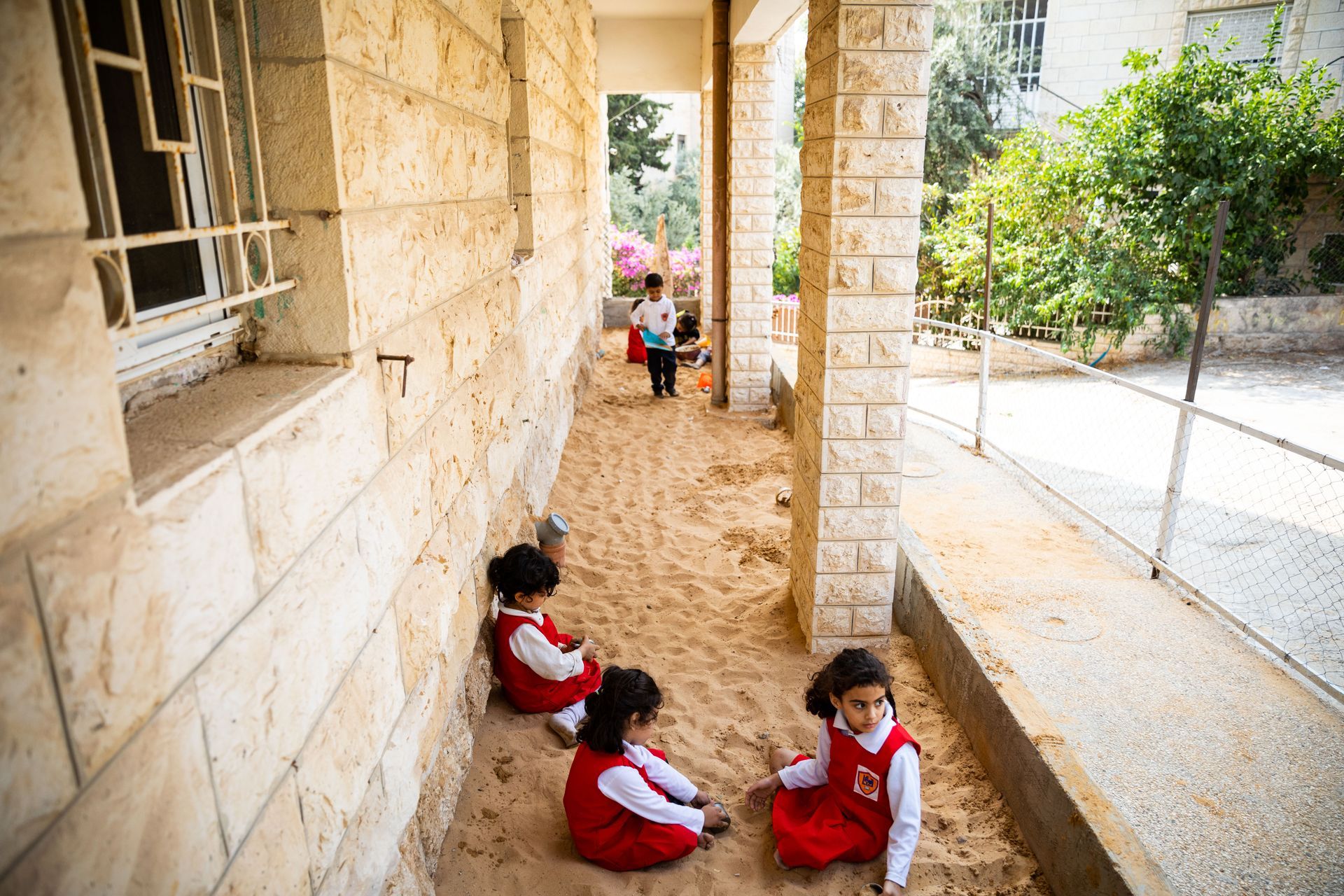
Children in red and white uniforms sitting in a stone school corridor outdoors
By Milad Vosgueritchian December 14, 2025
As a Palestinian living without freedom, I carry unending pain and deep sorrow. I witness children and women in tents whose dreams have been destroyed, entire Palestinian families erased from civil records, as if they had never existed on this land. From this place of lived reality, I say this clearly: blood only brings more blood. Violence creates no stability, and the use of excessive force against unarmed civilians, or against any human being, is a greater violence that opens wider doors to hatred. The killing of any Jew anywhere in the world is a crime against humanity , just as the killing of any innocent human being—regardless of religion or ethnicity—is a crime that can never be justified or ignored. All political conflicts must be resolved only through dialogue and negotiations, and through every peaceful, non-violent means, because violence builds no future, creates no peace, and leaves nothing but pain. The history of modern wars justified in the name of security and fought through overwhelming military force—from Vietnam to Iraq—alongside a long history of racism, oppression, and racial supremacy, has never produced peace or safety. It has produced only destruction, trauma, and generations shaped by hatred. Occupation and mass violence create conditions in which hatred and dehumanization spread—fueling antisemitism, Islamophobia, and other forms of racism, all of which must be rejected. We condemn all forms of repression of freedoms, violations of human dignity, restrictions on freedom of movement, and denial of access to religious sites. And I say this from the heart: just as I see Muslims as my brothers and sisters, I see Jews around the world as my brothers and sisters as well. Our struggle is not with a religion, nor with an identity, but with occupation, injustice, and the stripping away of humanity. Palestine deserves full freedom, and its people deserve to live with dignity and safety—one day, side by side with all the peoples of the region, in a just peace that includes all Arab countries, including Israel, based on justice, not force, humanity, not violence. Above all, what is most needed is an awakening of the human conscience—to see the human being before politics, life before conflict, and dignity before all other calculations. Salaam, Peace, Milad Vosgueritchian House of Hope Co-Founder and Director of Peace and Justice Education 
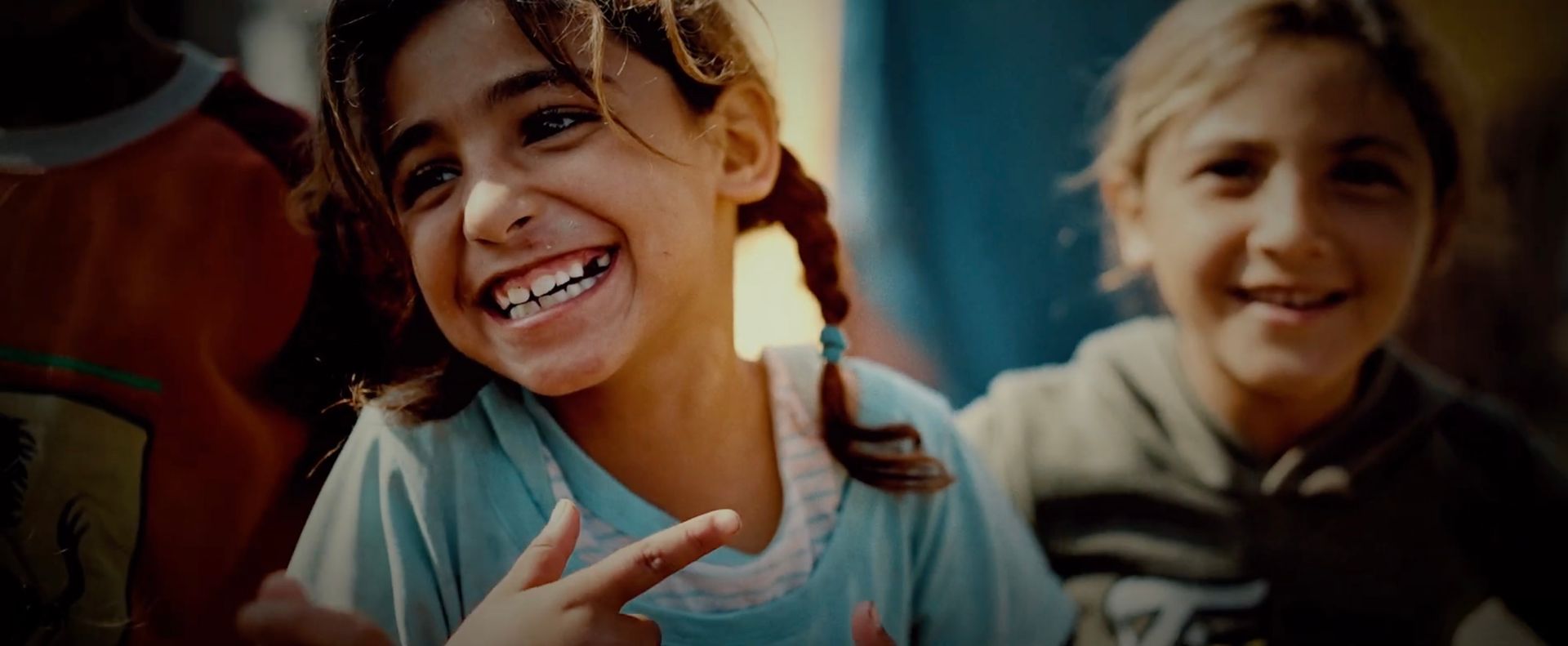
Two young Palestinian girls smiling, one pointing.
September 30, 2025
Even under Occupation and war, Palestinian children dare to reclaim what was stole from them — their childhood.
By Milad Vosgueritchian June 22, 2025
Dear Friends, In times of war, each of us is faced with a moral crossroads: Do we choose hate, fear, and revenge—or do we choose unity, humility, and shared humanity? As violence escalates between Iran, Israel, and the United States, the greatest crisis we face is not only political—it is deeply and devastatingly human. We are forgetting how to see one another. We have grown blind to each other’s pain. We stare into the mirror and see only our own fear, forgetting the faces of those suffering across the wall, across the border, across the street. Today, while some cling to comfort, others are crushed under the weight of occupation, hunger, and unrelenting trauma. We live in a world where the safety of one is sacred—and the dignity of another is expendable. Where one voice dominates—and the rest are silenced. It is time to stop the machine of death. It is time to end the starvation of Gaza. It is time to confront the daily trauma facing families across this land. The suffering is real. The wounds are deep. But still—peace is not lost. Peace is not an illusion. It is not naïve. Peace is a fragile fire that still burns in the hearts of the brave. And it needs all of us now. So what do we do in such a time as this? We must return to the only path that has ever saved us: The path of nonviolence. The path of compassion. The path of justice with love, and love with teeth. At House of Hope, we are not building peace on paper. We are building peace in hearts, in classrooms, in streets lined with rubble. We are raising up a generation who do not bow to hatred— Who do not answer rockets with revenge— But who say with trembling voices and steady souls: We will not become what has wounded us. We will not mirror the violence that surrounds us. We will live another way. Because nonviolence is not a slogan. It is a discipline. It is a fire that burns in the heart. It is a revolution that begins in the mind. It is a choice made daily—in our speech, in our thoughts, in our actions. It is saying: I will not let bitterness grow in me. I will not let my dignity be stolen by hatred. I will rise, again and again, in the name of peace. This is what we teach. This is what we live. This is what we offer to the world. To our friends in the United States and Europe—we ask you not only to stand with us, but to walk beside us. Support this work. Amplify our voices. Share our story. Let the world know that behind the Wall, a different future is already being built. Because this is not just about Palestine. It is about choosing life over death. Humanity over fear. And hope over despair. With resilience and hope, Milad Vosgueritchian Executive Director, House of Hope Al-Eizariya, Palestine
A group of children are sitting around a man holding a piece of paper.
December 17, 2024
Nonviolence Is The Path of the Soul
A young boy wearing a graduation cap and gown is standing in front of a bush of pink flowers.
November 16, 2024
What is Peace and Justice Education, and Why is it Crucial in Palestine?
Two young girls hugging each other in a park
By thea November 16, 2024
At House of Hope, we provide Palestinian students with a holistic education created by and for Palestinians that combines Peace and Justice Education with Trauma-Informed practices.