Announcing Palestine Beats - Part Two!

thea • May 31, 2022

Amplifying the voices of emerging Palestinian artists through music.
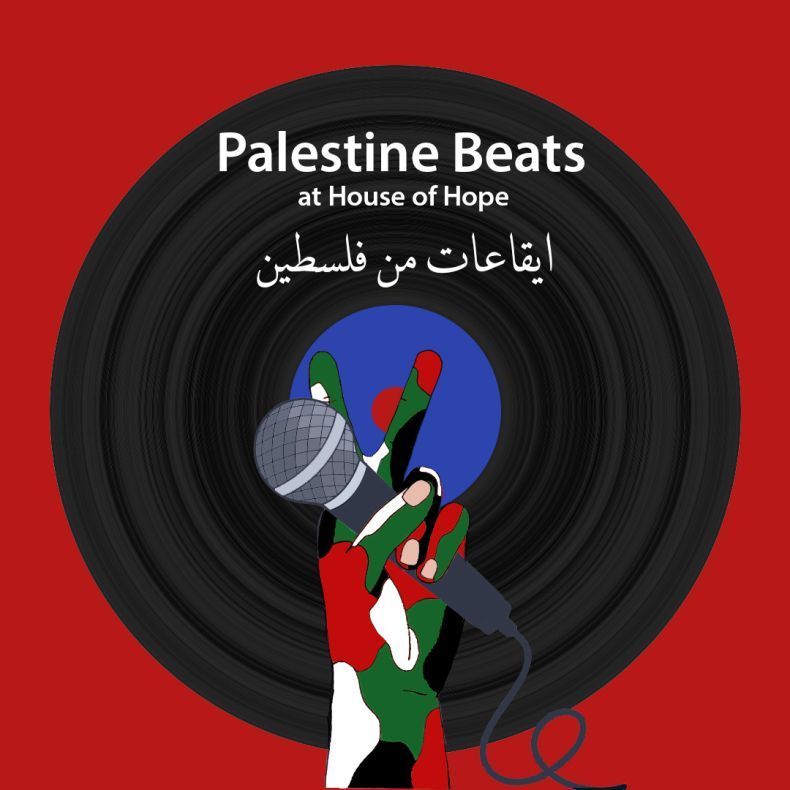
Our newest program for teens and young adults.

May 2022: We are delighted to share an update on our newest House of Hope program for Palestinian teens and young adults: Palestine Beats! Thanks to a generous grant from Empathy for Peace, we launched this first-of-its-kind music program in Palestine in the Fall of 2021.


We are also thrilled to announce Palestine Beats will continue, thanks to our new partnership with the prestigious Berklee College of Music, which will help fund the next program session in the winter of 2022/2023.


Palestine Beats helps young Palestinians growing up under Occupation to express themselves and the trauma they face through beat making, songwriting, and empowered communication. Watch our Palestine Beats video below to hear from the participants and see the program in action, and read on to learn about how this program has come to life over the last year!


We need your help raising the remaining $5,000 needed to fully fund the Winter 2022/2023 session. Donate now and see below for other ways to support Palestine Beats!

May 2021: We are excited to announce our newest House of Hope Vision School program: Palestine Beats. This program, the first of its kind, will help young Palestinians growing up under occupation to express themselves and the trauma they face through beat making, songwriting, and empowered communication.


Thanks to the generous grant support from Empathy for Peace, we are launching the first session of the Palestine Beats program this fall! Empathy for Peace advances empathy research and education with a specific focus on the translation of empathy research to evidence-based conflict resolution, peace, and reconciliation processes. Thank you Empathy for Peace!


Under the guidance of Teaching Artist Valerie Orth and Program Director Milad Vosgueritchian, a dozen Palestinian youth will get an introduction to beatmaking, songwriting, and empowered communication skills over a period of eight weeks. 


Participants will use empowered communication techniques to critique each other’s work, privately and in whole group feedback sessions. Each class will feature a short, interactive lesson followed by paired work where participants will give each other feedback. This eight-week course will culminate in a closing celebration where participants can share their live or recorded work with family, friends, and the community.


For the inaugural fall session, Palestine Beats will welcome twelve participants from the villages of Al-Eizariya, Abu Dis, Sawahrah a-Sharqiyah, and a-Sheikh Sa’d, as well as from nearby Al-Quds University.


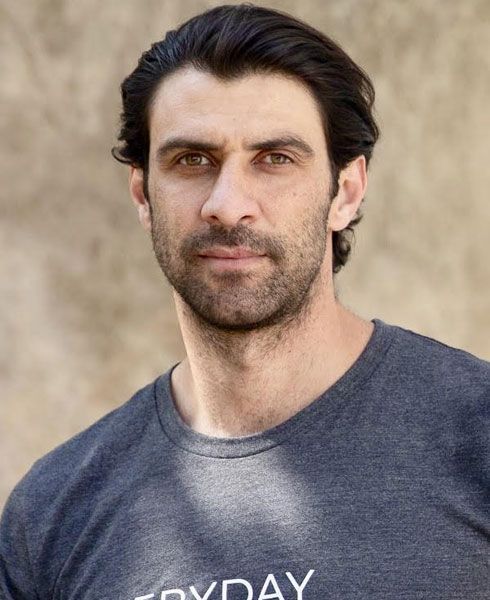
Nezar Akram, a graduate of House of Hope Vision School who has a great interest in beatmaking, is excited for what this program can do for his music: “As a musician, I need to know beats, drums, all the tools musicians have,” said Akram (pictured below).
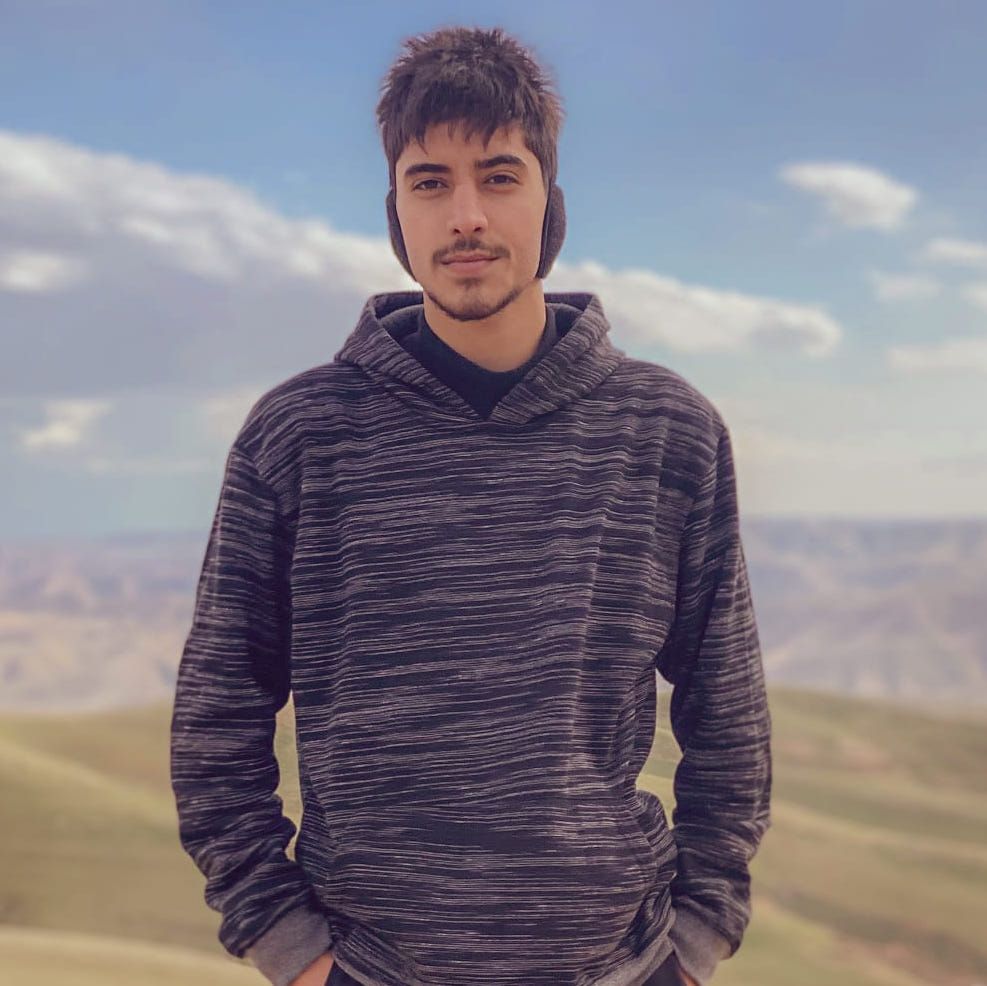
Nezar Akram, a graduate of House of Hope Vision School and potential participant for the program. Nezar is standing outdoors in front of a mountainous landscape with hands in pockets.

Palestine Beats Staff Bios

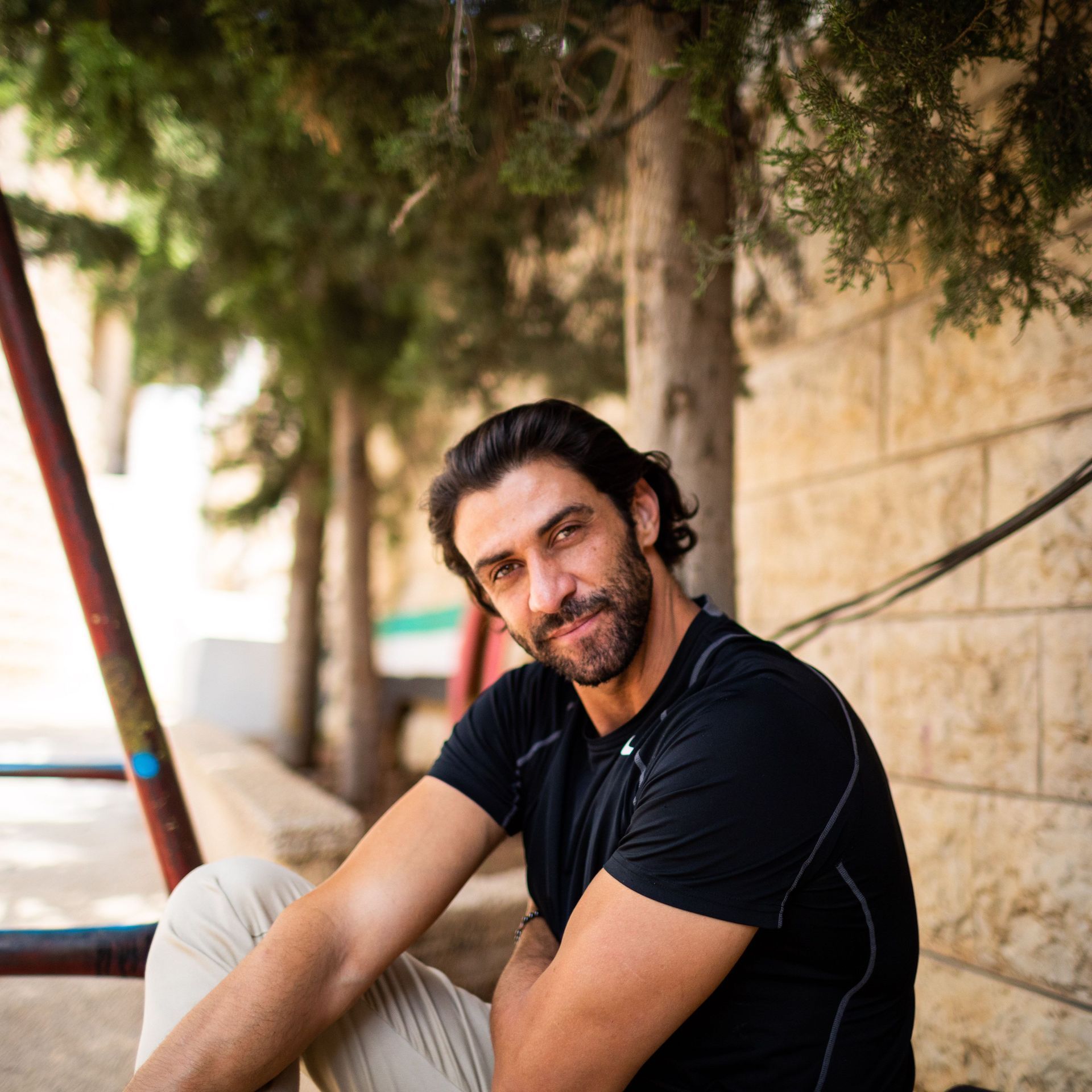
Milad Vosgueritchian, chairman of Vision Association for Culture and Arts and its House of Hope Vision School. Milad is sitting on the ground outside of a stone wall and smiling at the camera.

Milad Vosgueritchian, a Palestinian resident of Al Eizariya, chairman of Vision Association for Culture and Arts and its House of Hope Vision School, is an educator, community organizer, and NGO director with proven expertise in nurturing changemakers. In and out of the classroom, he inspires Palestinian youth to embrace empowered communication, built bridges between estranged Jewish and Palestinian communities, and put vocational training within reach for low-income Palestinian women. He is currently pursuing a master’s degree in Human Rights and Nonviolence from AUNOHR University in Lebanon. As a consultant for the Rossing Center for Education and Dialogue, Milad worked extensively in empowered communication education for Palestinian youth. A public speaker seasoned in facilitating cross-cultural and interfaith encounters, he has extensive knowledge of Jerusalem's communities.
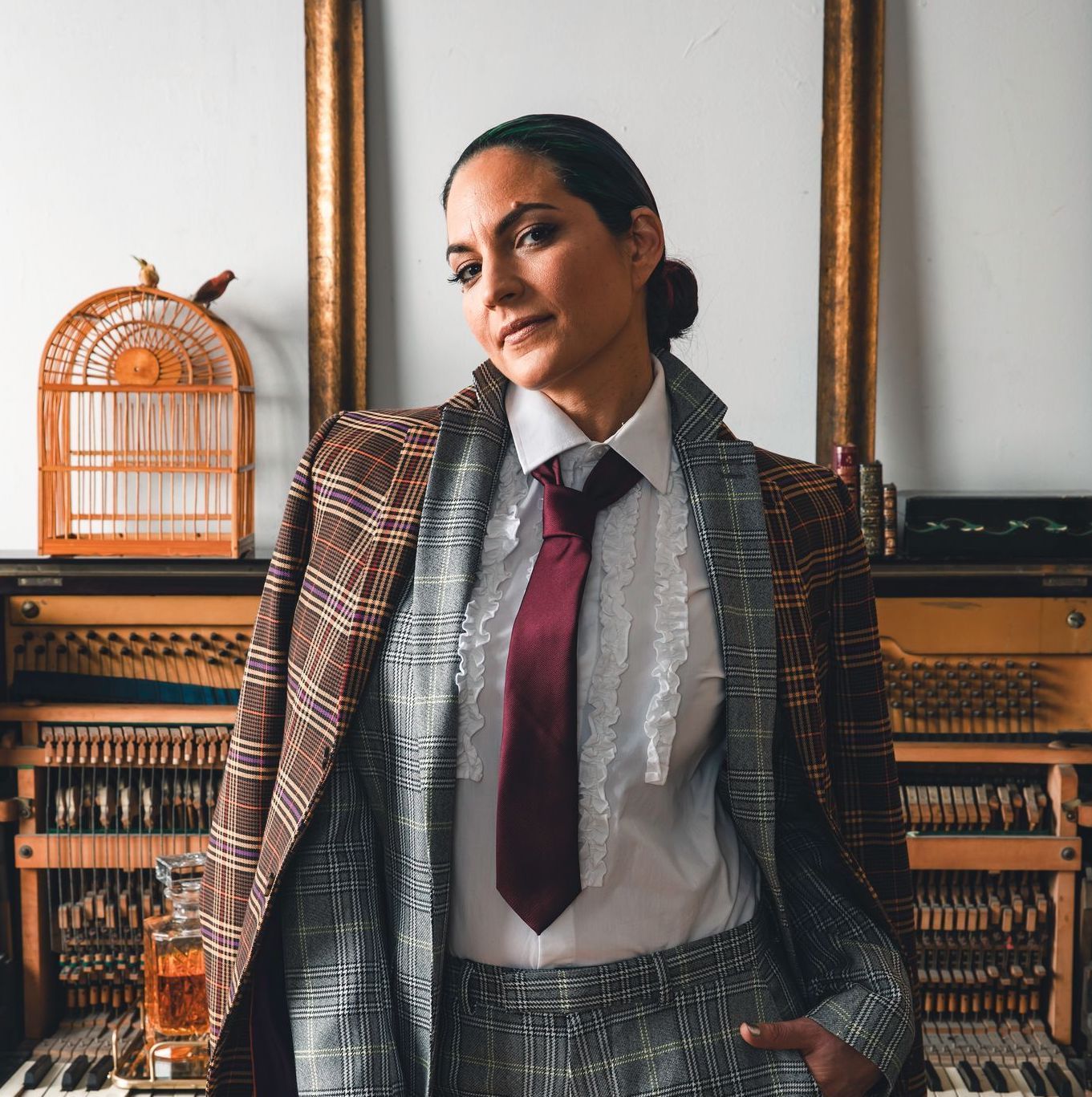

Valerie Orth, Palestine Beats Teaching Artist. Valerie is standing in front of a musical instrument, wearing a mauve tie and white collared shirt, with two plaid blazers on over it.

Valerie Orth is an Assistant Professor in the Songwriting Department at Berklee College of Music, teaching music technology and production. She is the recipient of the Berklee Faculty Fellowship 2022-2023 for Palestine Beats. Valerie is a professional music producer, singer, and songwriter. A performer since age 5, she toured the US and released all her music independently. An educator and activist, she co-led the NYC chapter of Beats By Girlz, empowering the next generation of women & gender expansive people through music & tech. Valerie developed and ran beatmaking intensives at various high schools, and co-founded BKLYN Song Camp, a music production and songwriting virtual camp that focuses on building co-writing, collaboration and communication skills.

Support Palestine Beats

Donate using the form below, and you can also help us promote the program with Palestine Beats merch. Buy a Palestine Beats T-Shirt or buy a Palestine Beats Tote and a portion of every sale goes to Palestine Beats!

New Paragraph

Team Hope

Supporting House of Hope
Close-up of a child resting their face on their hand, looking thoughtful in soft light
By Milad Vosgueritchian, House of Hope Cofounder and Director of Peace and Justice Education • October 10, 2026
It is early morning. You pick up your phone before you are fully awake. The first image is a child in Yemen, standing in the rubble of what used to be her home. Something in your chest tightens. You scroll. A flooded village. A hospital without power. A mother in Sudan holding a baby too weak to cry. By the fifth picture, the tightness has faded. By the tenth, you are checking the weather. This is not cruelty. The heart can only absorb so much before it begins to protect itself. But what begins as protection can slowly become a way of life. And so the biggest question we face in our daily lives is this: in the face of injustice, do we live with our eyes closed, or with our eyes open? Writing from a jail cell in Birmingham, Martin Luther King Jr. said we are "caught in an inescapable network of mutuality, tied in a single garment of destiny." How, then, can a person feel completely safe while a child in Gaza, Uganda, or anywhere else in the world is suffering from a lack of food, water, or shelter, or is deprived of the most basic natural rights: safety, dignity, and life? The pain of another is not distant from us. The pain of one human being is the pain of us all. Perhaps this is one of the most difficult moral tests of our lives: to reject the idea that the world is divided into "us" and "them," and to understand that political and geographical borders cannot erase the truth that we belong to one human family. And here, the power of nonviolence emerges. Nonviolence, at its core, is not simply the refusal to use force. It is a way of seeing the human being and the world. It is a deep awareness that I am part of a large global family, while at the same time being part of my own small family and my local community. It allows me to see the child whose name I do not know, in a place far away from me, as if that child were one of my own. It allows me to see another person's hunger as a wound in our shared humanity, and their fear as a moral responsibility that belongs to all of us. But seeing is not enough. Elie Wiesel, who survived Auschwitz, warned that "neutrality helps the oppressor, never the victim." To see injustice and remain silent, where we are free to speak, is not neutrality; it can become an indirect way of allowing injustice to continue. And to live in safety while ignoring the suffering of others does not mean that I am outside the problem. It may simply mean that I have chosen not to see it. Therefore, perhaps the real question is not: Can I change the world? But rather: Can I live with my eyes open? Can I refuse to allow injustice to become normal? Can I raise my children with compassion instead of fear, with questions instead of silence, and with dignity instead of indifference? Can I see the humanity of another person even when they are different from me? So how do we use the power of nonviolence? Injustice cannot survive on its own. It depends on people who look away, stay silent, and go along. Nonviolence draws its strength from refusing to do that, together. When enough ordinary people refuse to be silent, injustice begins to lose its hold. This is how people without weapons have ended wars, brought down dictators, and won rights once thought impossible. And it begins in our daily lives: in learning about the suffering of others and not letting it fade from our attention, in speaking up to our neighbors and our leaders, in supporting those who are helping, and in teaching our children that silence is a choice, and so is courage. All of this rests on a simple realization: that my life is connected to the lives of others; that my peace is incomplete while another human being is deprived of safety; and that justice is not a privilege reserved for those who live in safe places, but a shared human right. We are one family, large in its global reach and small within the circles of our daily lives. And between the two, our responsibility begins: To see. To feel. To reject injustice. And to choose the path of nonviolence.
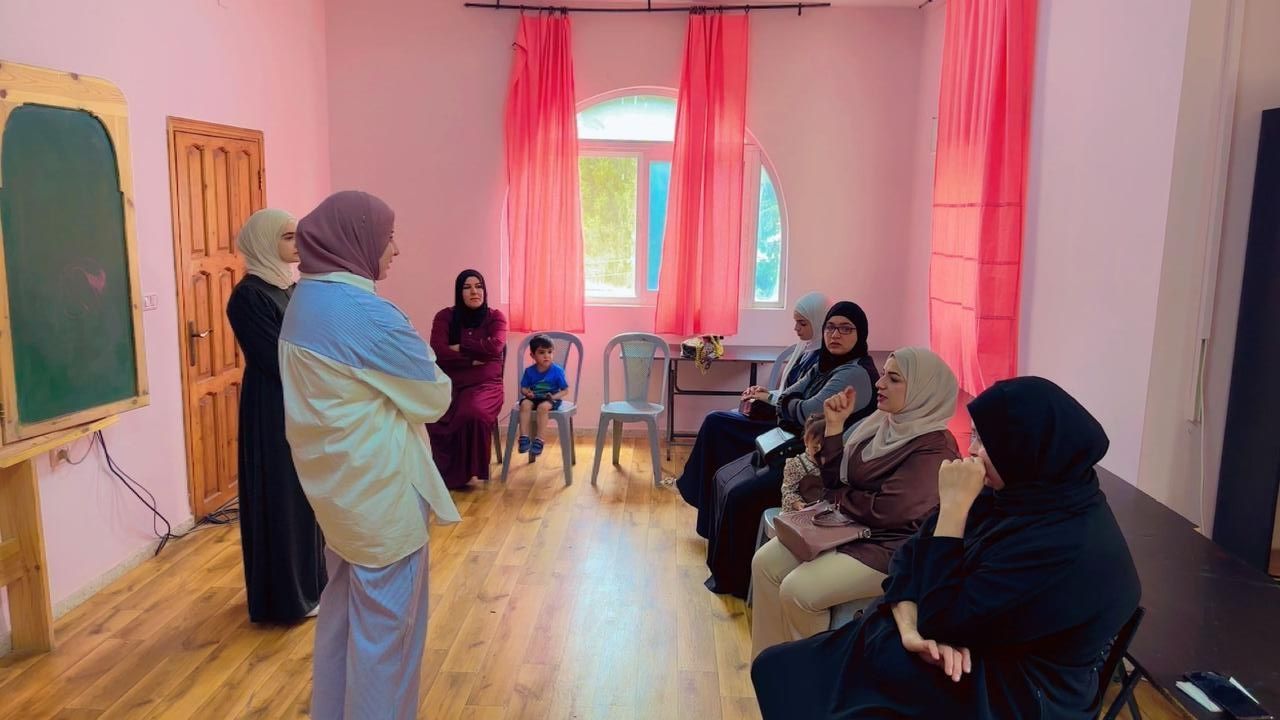
Small group meeting in a bright room, with seated attendees and a speaker near a chalkboard and pink curtains.
By Mona Halabai, House of Hope Project Coordinator • October 10, 2026
From “Carrying a Heavy Load” to “Calm”
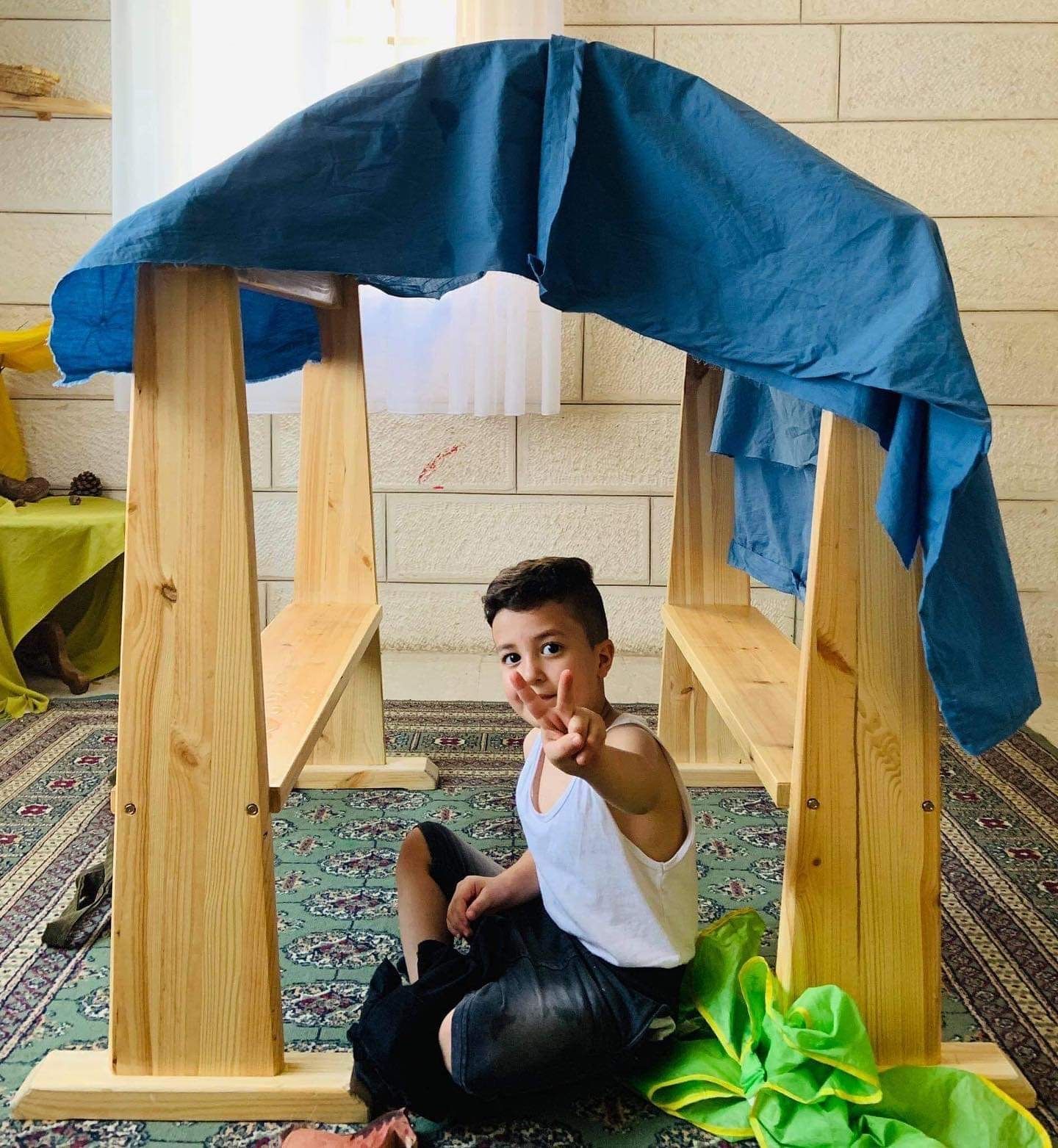
Child sitting inside a small wooden fort with a blue cloth roof, making a peace sign at the camera.
By Manar Wahhab, Cofounder and Director of Trauma Informed Pedagogy • September 21, 2026
Last spring, two of our children were fighting over a watering can in the school garden. Yousef, who is seven, pulled it out of Lina's hands, and she raised her fist to hit him. Then she stopped. Her hand stayed in the air for a moment, and she said, loudly and a little shakily, "I am very angry at you." Yousef was so surprised he gave the watering can back. It was a small thing, and it lasted perhaps ten seconds. But I went home that evening and thought about it for a long time. For months we had been practicing, in circle time, in stories, in the way the teachers speak, what it means to name a feeling instead of acting it out with our hands. I had often wondered whether any of it was reaching the children. In that garden, I saw that it was. That moment answered a question I had carried for years. What about the child? For a long time, working with children, I felt something was missing in the way we talk about education. We talk about curriculum, subjects, results, and grades, and all of these matter. But I kept asking: what about the child herself? What about her inner world, her imagination, her feelings, her relationship with nature, her ability to trust, to disagree, and to live with others without violence? These questions slowly led me to Anthroposophy and Waldorf education. I don't claim to understand Anthroposophy fully, and I return to many of its ideas again and again. But its picture of the human being moved me deeply. A child is not a head to be filled with information and then tested. A child is a whole person, growing through the body, the feelings, the imagination, the will, and something inside that is hard to explain or measure. Seeing children this way changed what I noticed. Simple things began to look important: a story, a song, painting, working with the hands, tending a garden. Most of all, time. I think time is what education today is most missing. Children need time to experience, to make mistakes, to imagine, and to become. Lina needed months of that time before her hand stopped in the air. A school that grew out of our reality House of Hope did not begin as a plan to build a traditional Waldorf school. It grew out of our lives, our children, and the difficult reality of living in Palestine. Waldorf and Anthroposophy became part of how we think about children gradually, as we searched for ways to care for them well. For me, that search cannot be separated from peace and nonviolence. Many of our children know fear, loss, and violence far too early. Some carry it into the classroom in their bodies and their anger. We cannot control the world outside our gate. But we can decide what happens inside it. We can decide how we speak to a child, and how we respond to anger and conflict. We can choose not to rule through fear or humiliation, and not to punish before we try to understand. When a child is hurting, we can listen first. We haven't found all the answers We make mistakes. We get tired. We disagree with each other. Some days reality is much stronger than all our beautiful ideas. Still, I believe a school can be a different kind of place. Children should learn mathematics, language, and science here, and they do. But they can also learn to respect themselves and others, to listen, to cooperate, to see beauty, and to meet conflict without hurting anyone. And they can learn to keep some sense of hope, which in our situation is no small thing. Why I'm writing In the posts that follow, I want to share what I'm learning: Anthroposophy as I understand and experience it, Waldorf education as we try to live it at House of Hope, what the children teach us, and what it means to build a human school in a place where that is not easy. I'm not writing as an expert. I'm writing as someone who is still learning and still questioning, and who still believes education can help us become freer, more dignified, and more peaceful human beings.
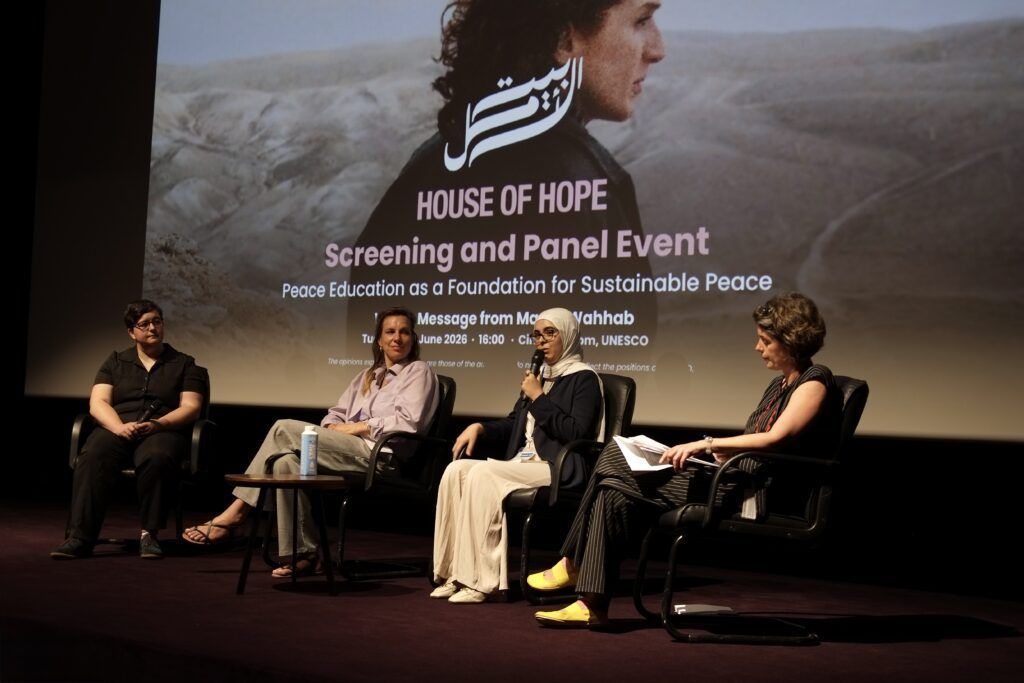
Panel discussion on stage in front of “House of Hope” projection, with four speakers seated in chairs
By thea • July 5, 2026
On June 23, the award-winning documentary House of Hope was screened at UNESCO Headquarters in Paris — co-hosted by the Permanent Delegations of Spain, the Netherlands, and the State of Palestine. Diplomats, policymakers, and peacebuilders gathered around one call: make education for peace a strategic priority in the Middle East . Manar sent a video message from the West Bank. The Ambassador of Spain, H.E. Miquel Iceta, opened with a Mahmoud Darwish poem — "As you fight in your wars, think of others. Don't forget those who desperately demand peace." H.E. Monique van Daalen, Ambassador of the Netherlands, said she hopes the film will inspire continued support for "the power of creativity and cultural expression in fost ering dialogue and resilience." Marjolein Busstra, the film's director, said: "I know what it means to want your child to grow up with space for feeling, for creativity, for the full unfolding of who they are. That is what Manar and Milad are fighting for." Batool Abu Akleen, a Palestinian poet and university student from Gaza, said: "We need to teach all young generations to stand against oppression, and to question things rather than just taking them as matters of fact." And H.E. Mr. Atieh, Ambassador of Palestine to UNESCO, closed with a tribute: "House of Hope is a portrait of Palestinian children and teachers struggling to preserve their humanity in circumstances that challenge them on a daily basis. I admire those children and pay tribute to their teachers." The screening comes just ahead of UNESCO's Transforming Education Summit +4 on July 10 — which will set the global education agenda beyond 2030. House of Hope is exactly the kind of living proof that summit needs to see. Read the full write-up → tfip.org/award-winning-documentary-house-of-hope-brings-peace-education-into-the-spotlight-at-unesco
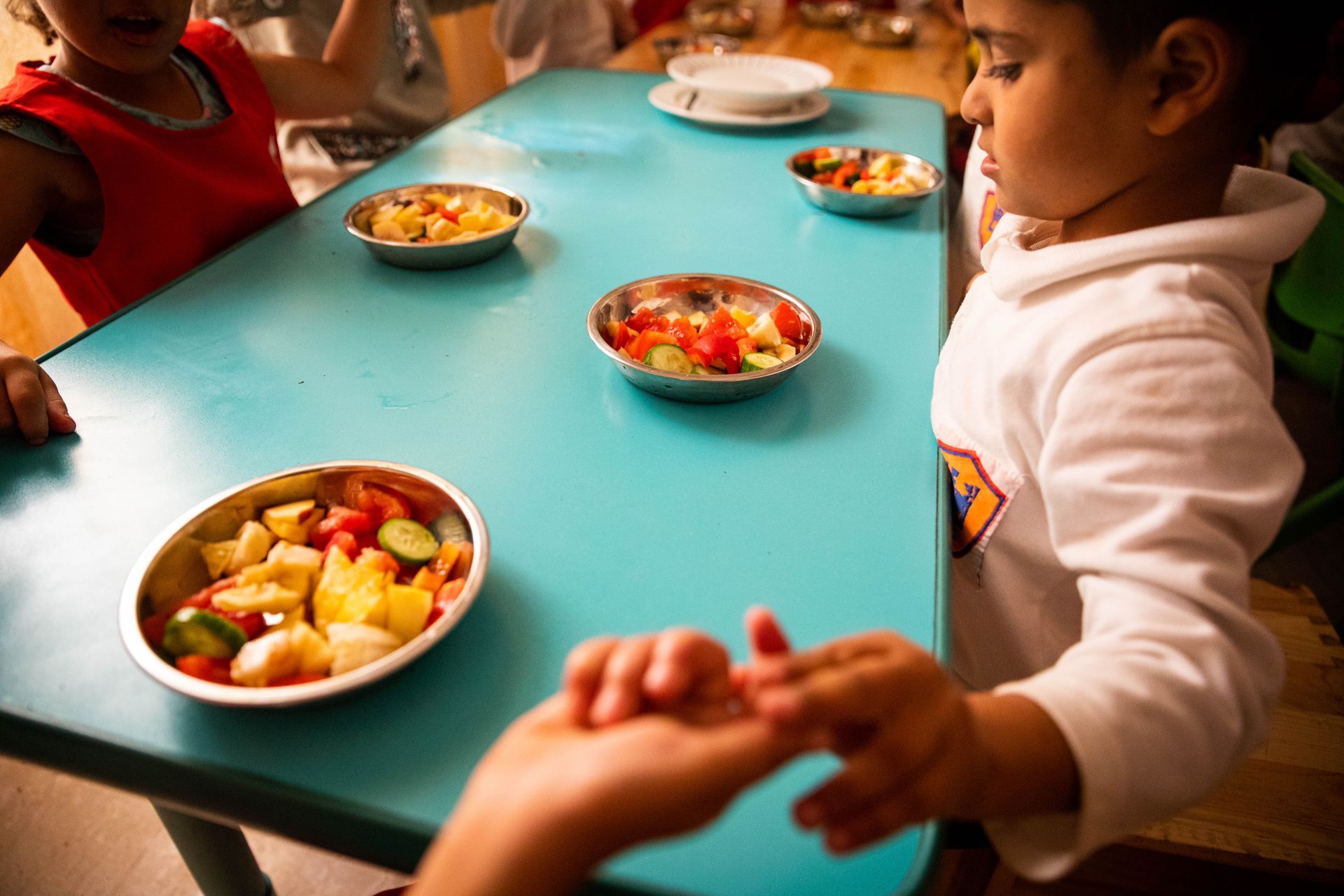
Children eating colorful fruit bowls around a turquoise table
By Milad Vosugeritchian • April 3, 2026
Dear Beloved Brothers and Sisters, Grace and peace to you. I write to you today from the West Bank — during a war, with missiles crossing the skies. And yet it is also a sacred season of prayer. Our Muslim neighbors are observing Ramadan. Soon the Jewish community will celebrate Passover. And Christians around the world are preparing for Easter — celebrating the resurrection and the promise that life is stronger than death. Each of these holy days calls us to wake up spiritually. To do so, I often turn to prayer — to the words of Christ, to the Gospel passages that have stayed close to my heart in this same land where Jesus walked. They call us to remain awake in prayer, to have courage in the face of suffering, and to trust that God’s hope is stronger than fear. “I have told you these things, so that in me you may have peace. In this world you will have trouble. But take heart! I have overcome the world.” — John 16:33 “Why are you sleeping?” he asked them. “Get up and pray so that you will not fall into temptation.” — Luke 22:46 Living here in the West Bank, surrounded by uncertainty and fear, these words speak directly into our present moment. When Jesus says, “Take heart! I have overcome the world,” he is not promising us an easy life. He told us clearly that we would face trouble. Yet in the very same breath, he calls us to courage. For me, faith and courage cannot be separated. Faith calls us to courage. Faith is courage. Faith allows us to stand when fear surrounds us. Faith allows us to take the next step when the road ahead is uncertain. Faith allows us to keep believing — that love, justice, and our common humanity will prevail. Faith does not remove the mountain before us. Faith gives us the strength to climb it — and the courage to take the next step. Here, faith is not an idea. It is how we live. In recent nights, we have watched missiles crossing the sky as war unfolds between Israel and Iran. In Israel, there are bomb shelters in nearly every building. Here in the West Bank, most Palestinian communities have none. Children still ask questions. Parents still try to calm their fears. Schools have closed. Many children are trying to continue learning online whenever they can. Families are doing their best to live ordinary lives in the midst of extraordinary uncertainty. When I see Palestinian families navigating this fear each day, I remember: the Gospel does not allow us to look away from suffering. And so the words of Jesus return to my heart with urgency. “Why are you sleeping?” I hear this not only as a question for those of us living here — but as a question for the whole world.  “Why are you sleeping?” Christ calls us to wake up — not only in prayer, but in conscience. To see suffering clearly. To refuse indifference. To stand for justice with courage and with compassion. For me, following Christ here means living what I call a resistance of the heart — a resistance that refuses hatred, a resistance that protects our humanity, a resistance that continues to believe that love is stronger than fear. This resistance is sometimes tested in very personal ways. Just one month ago, I was driving home from the gym with my son when an Israeli military jeep intentionally struck my car. In that moment I felt fear and shock. Yet even then I heard a quiet voice in my heart — reminding me that violence and fear do not have the final word. Even in the hardest moments, the Gospel still calls us to live differently. In times like these, prayer becomes our strength. Prayer reminds us that God is stronger than fear — stronger than weapons, and stronger than the darkness of war. At the House of Hope School, we try to live this message every day with our children. In the midst of fear and uncertainty, we teach them courage, compassion, and the belief that even in the hardest circumstances — peace and humanity are still possible. So we remain awake in prayer. We choose courage in the face of suffering. And we continue walking forward in hope — trusting that God’s love is stronger than fear. We hold onto the words of Christ: “Take heart.” Because Christ has overcome the world, we believe that violence will not have the final word. Fear will not have the final word. Hatred will not have the final word. Love will overcome. Justice will overcome. And one day, by God’s grace — peace will overcome the world. Milad Vosugeritchian, Co-founder and Director of Peace and Justice Education, House of Hope Vision School
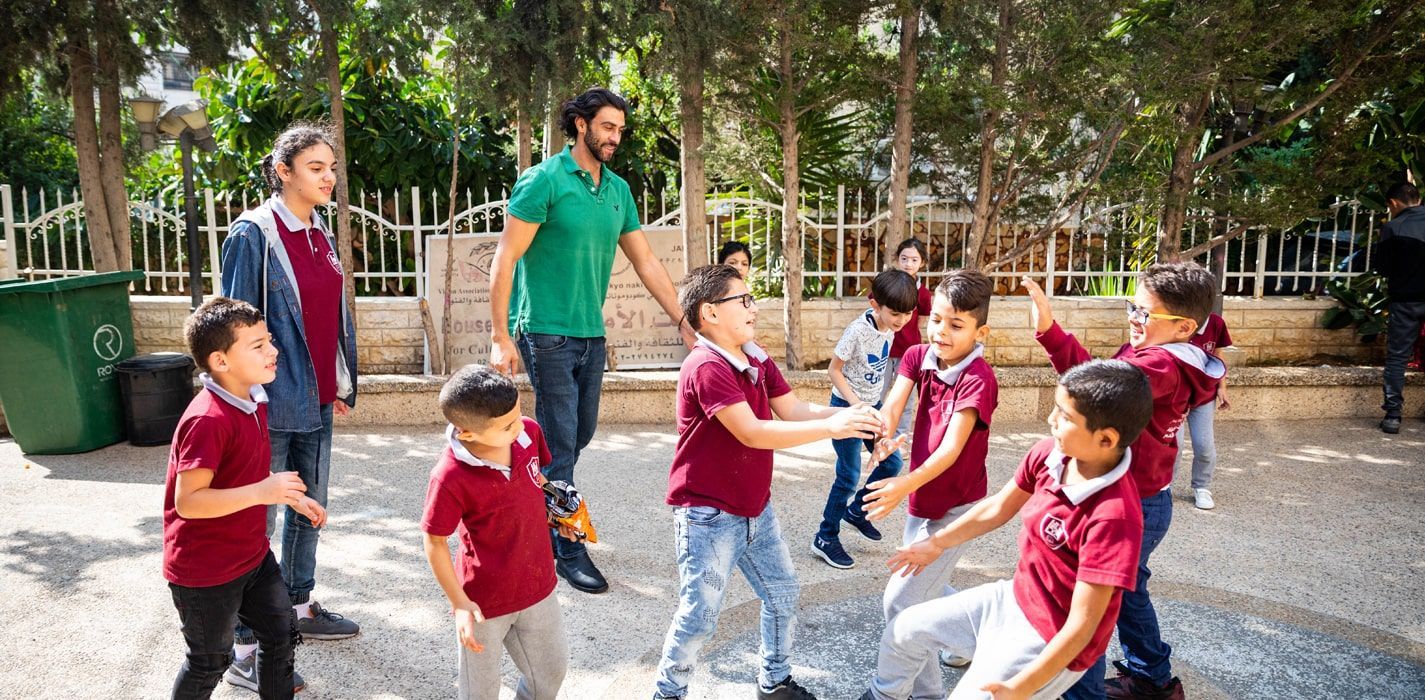
An adult in a green shirt supervises children playing a game in a tree-lined outdoor schoolyard.
By thea • March 14, 2026
Times of war create immense stress and uncertainty for all of us, but children are especially susceptible. Even if they are not in physical direct danger, children can experience negative psychological effects from living through war. A review published in 2022 found that rates of PTSD, depression, and anxiety were 2-3 times higher among those exposed to armed conflict compared those who weren’t, with women and children being the most vulnerable. There are, however, things we can do as caregivers to help counter the effects of war on the children that we care for. Manar Wahab, House of Hope’s Director of Trauma-Informed Education has recently taken the time to assemble guidance for caregivers, based on her experience and training in the Waldorf educational framework. The Waldorf approach focuses on “Emergency Pedagogy” to help stabilize children’s emotional well-being by emphasizing familiar structures and routines, as well as artistic expression. You can read Manar’s full guidance in the documents linked below, which are available in both English and Palestinian Arabic. These documents contain practical suggestions for anyone caring for young children during the chaos and stress of war, and include activity suggestions as well as stories that can help children hold on to a sense of hope during wartime. 
Close-up of a person resting their face on their hand, gazing out a window in soft light.
By Milad Vosgueritchian • February 1, 2026
To All Who Believe That Humanity Comes First
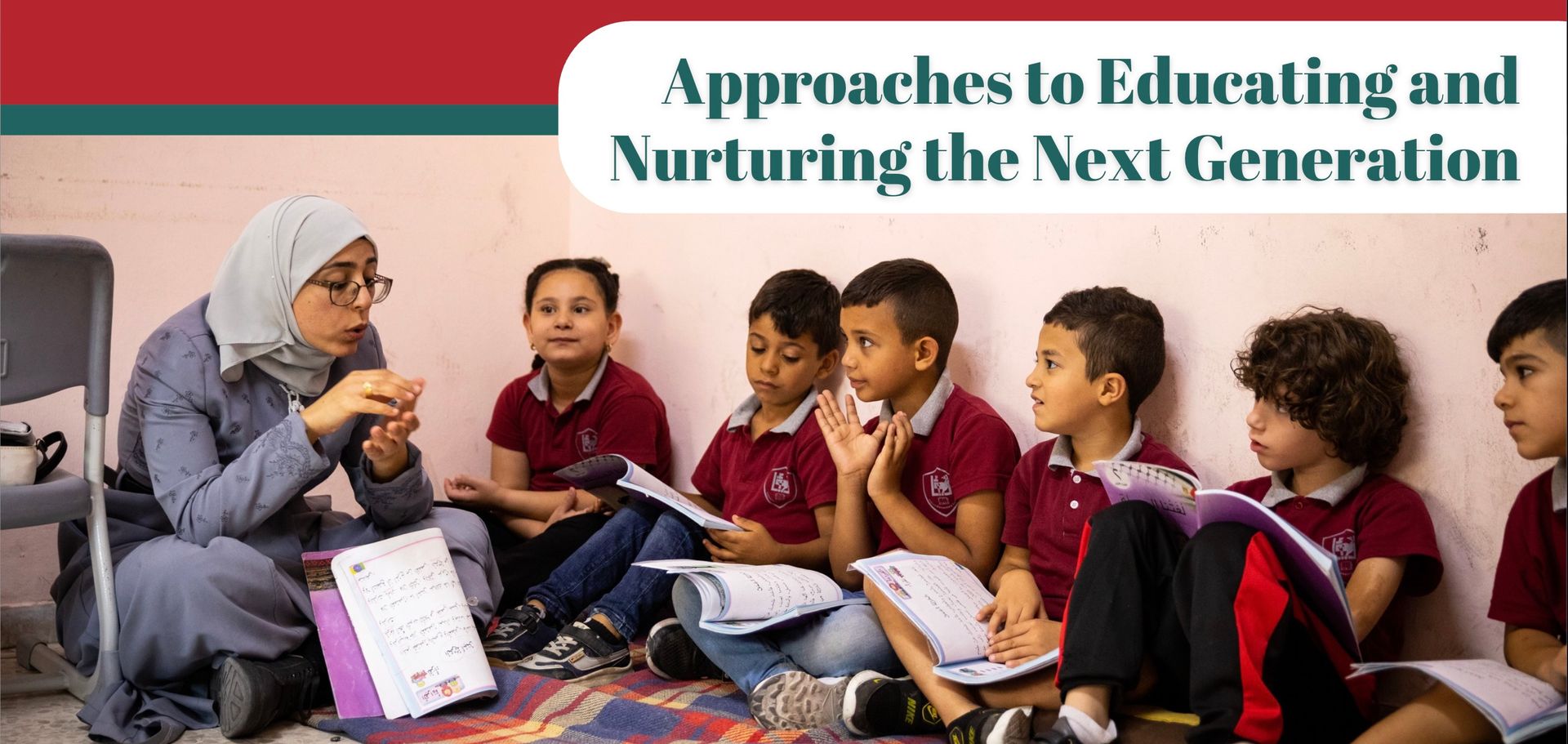
A teacher in a hijab leads a lesson with several children sitting on the floor.
By thea • January 20, 2026
Palestinian Nonviolence and Peacebuilding: Approaches to Educating and Nurturing the Next Generation
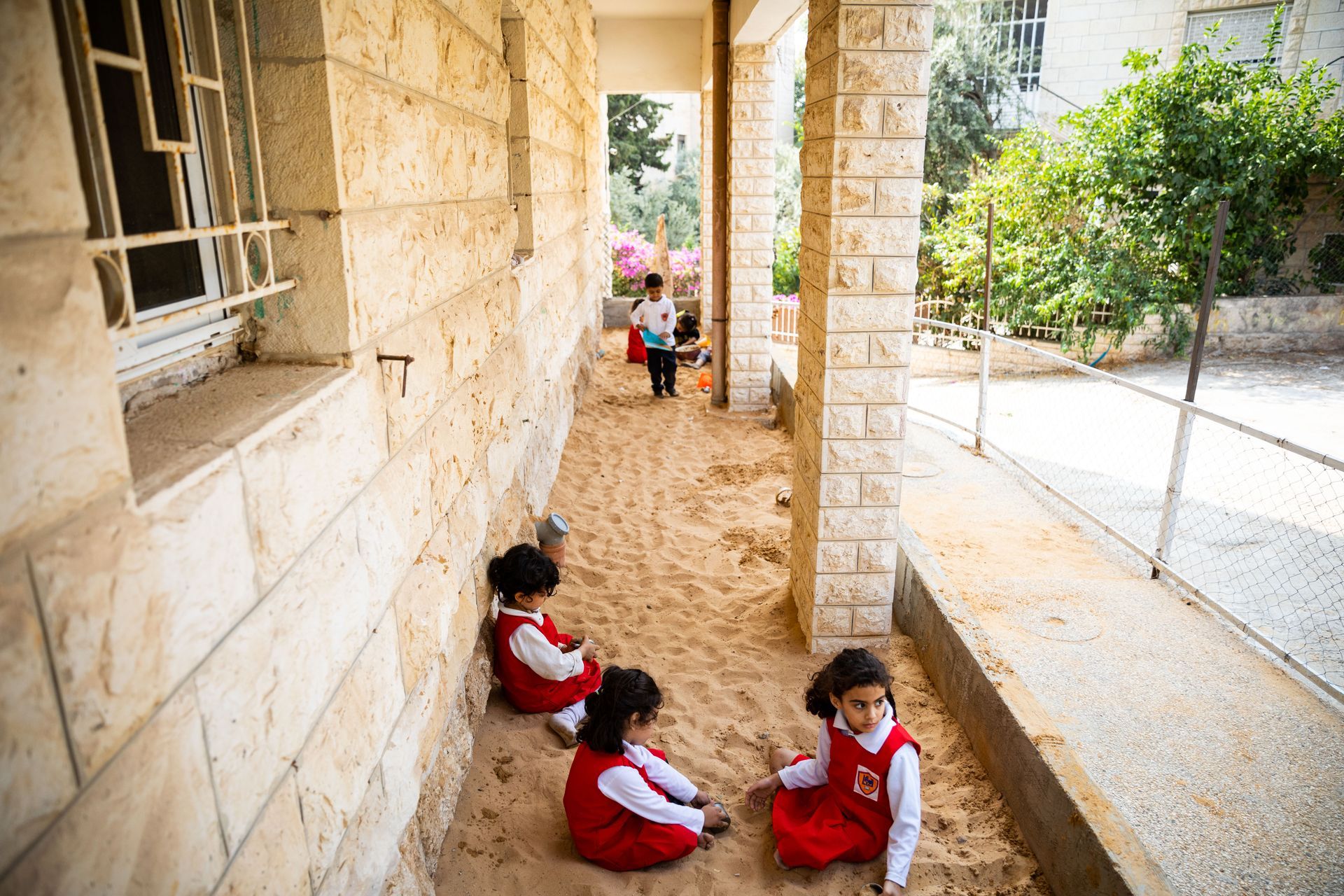
Children in red and white uniforms sitting in a stone school corridor outdoors
By Milad Vosgueritchian • December 14, 2025
As a Palestinian living without freedom, I carry unending pain and deep sorrow. I witness children and women in tents whose dreams have been destroyed, entire Palestinian families erased from civil records, as if they had never existed on this land. From this place of lived reality, I say this clearly: blood only brings more blood. Violence creates no stability, and the use of excessive force against unarmed civilians, or against any human being, is a greater violence that opens wider doors to hatred. The killing of any Jew anywhere in the world is a crime against humanity , just as the killing of any innocent human being—regardless of religion or ethnicity—is a crime that can never be justified or ignored. All political conflicts must be resolved only through dialogue and negotiations, and through every peaceful, non-violent means, because violence builds no future, creates no peace, and leaves nothing but pain. The history of modern wars justified in the name of security and fought through overwhelming military force—from Vietnam to Iraq—alongside a long history of racism, oppression, and racial supremacy, has never produced peace or safety. It has produced only destruction, trauma, and generations shaped by hatred. Occupation and mass violence create conditions in which hatred and dehumanization spread—fueling antisemitism, Islamophobia, and other forms of racism, all of which must be rejected. We condemn all forms of repression of freedoms, violations of human dignity, restrictions on freedom of movement, and denial of access to religious sites. And I say this from the heart: just as I see Muslims as my brothers and sisters, I see Jews around the world as my brothers and sisters as well. Our struggle is not with a religion, nor with an identity, but with occupation, injustice, and the stripping away of humanity. Palestine deserves full freedom, and its people deserve to live with dignity and safety—one day, side by side with all the peoples of the region, in a just peace that includes all Arab countries, including Israel, based on justice, not force, humanity, not violence. Above all, what is most needed is an awakening of the human conscience—to see the human being before politics, life before conflict, and dignity before all other calculations. Salaam, Peace, Milad Vosgueritchian House of Hope Co-Founder and Director of Peace and Justice Education 
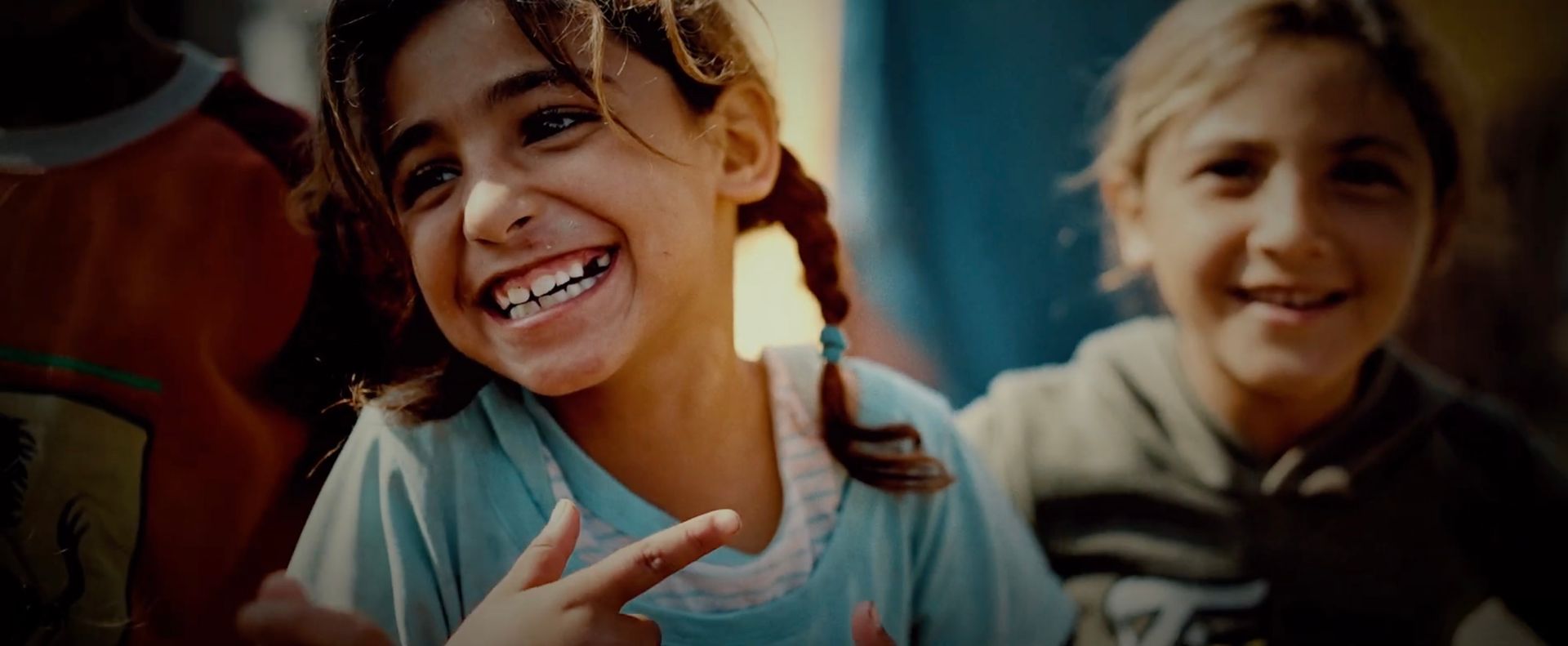
Two young Palestinian girls smiling, one pointing.
September 30, 2025
Even under Occupation and war, Palestinian children dare to reclaim what was stole from them — their childhood.